Preserves and canned goods represent the pinnacle of heritage pantry tradition. These jars of summer abundance, carefully stored on wooden shelves, connect modern kitchens to centuries of seasonal preservation wisdom.
Organizing Preserved Foods
Traditional pantries dedicated entire shelving sections to preserves, organizing by type and season for intuitive access throughout the year.
Categorization System
- Fruit Preserves: Jams, jellies, marmalades, fruit butters
- Pickled Vegetables: Cucumbers, beets, onions, mixed vegetables
- Tomato Products: Sauces, whole tomatoes, paste, salsa
- Canned Fruits: Peaches, pears, berries, stone fruits
- Specialty Items: Chutneys, relishes, specialty preserves
Rotation Practice
Organize preserves with oldest jars at front, newest behind. This first-in-first-out system ensures nothing languishes forgotten while maintaining ideal consumption timelines.
Labeling for Longevity
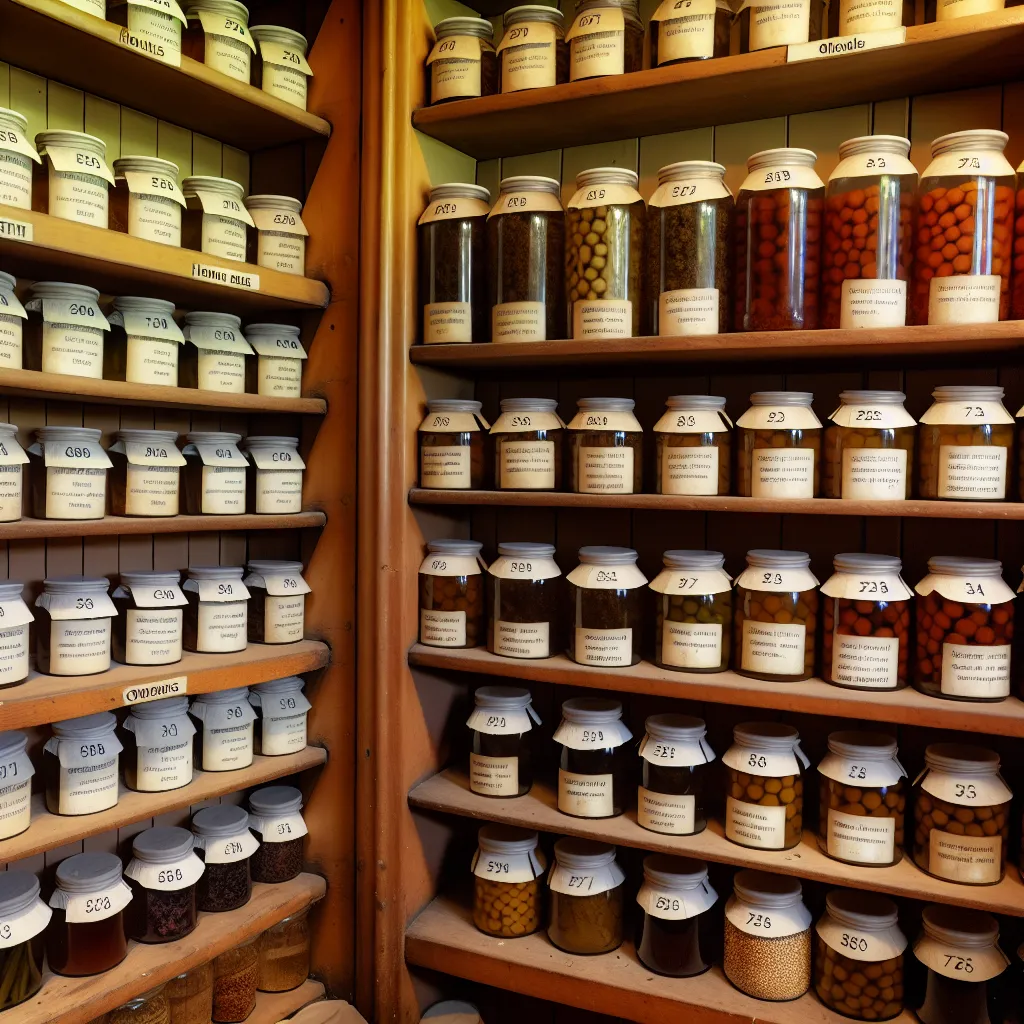
Comprehensive labeling transforms random jars into organized collection. Traditional labels included contents, date, and often batch notes for future reference.
Essential Label Information
- Contents description (e.g., "Strawberry Jam")
- Processing date (month and year minimum)
- Batch notes if you make variations
- Source if using special ingredients (garden harvest, farmer's market)
Storage Environment
Properly processed canned goods remain shelf-stable for 12-18 months when stored correctly. Traditional cellars and pantries provided ideal conditions: cool, dark, and dry.
Optimal Conditions
- Temperature: 50-70°F (10-21°C) for best quality retention
- Darkness: Away from direct sunlight to prevent color degradation
- Humidity: Moderate levels prevent rust on metal lids
- Stability: Sturdy shelving that won't shift or vibrate
Safety First
Inspect all preserved foods before consumption. Bulging lids, unusual odors, or visible mold indicate spoilage. When in doubt, discard safely. Heritage preservation emphasizes both tradition and food safety.
Aesthetic Display
Canning jars, with their jewel-toned contents and uniform shapes, create beautiful pantry displays. Traditional organization balanced accessibility with visual appeal.
Display Principles
- Arrange by color for visual impact: yellows, oranges, reds, purples
- Use uniform jar sizes for each shelf when possible
- Face labels forward for easy identification
- Create depth by placing taller jars behind shorter ones
- Leave space between jars for air circulation and easy retrieval
Seasonal Planning
Strategic preserving ensures year-round variety. Traditional households maintained canning calendars, processing foods at peak ripeness throughout growing season.
Seasonal Preservation Calendar
- Spring: Rhubarb, early berries, asparagus
- Summer: Tomatoes, stone fruits, cucumbers, peppers
- Late Summer: Corn, green beans, peaches, plums
- Autumn: Apples, pears, pumpkin, late tomatoes
Integration with Pantry Design
Preserves storage should complement overall heritage aesthetics. Natural oak shelving, brass brackets, and adequate depth (12-14 inches) create functional beauty.
Heritage Connection
Each jar of preserves represents hours of careful work connecting you to seasons and traditional food preservation. This tangible link to heritage practices makes preserve storage one of the most meaningful aspects of traditional pantry organization.
Maintaining Your Collection
Regular assessment ensures your preserve collection remains safe and accessible. Quarterly reviews during seasonal pantry refreshes provide natural checkpoints.
Maintenance Checklist
- Check all seals remain intact (lids should not flex when pressed)
- Wipe jars clean of any dust or residue
- Rotate stock, moving older jars forward
- Remove and safely discard any questionable jars
- Update inventory list for planning future preservation
Well-organized preserves storage celebrates seasonal abundance while providing delicious sustenance throughout the year. This heritage practice honors tradition while creating beautiful, functional pantry displays that inspire daily cooking.